
Building Business Resilience: How to Turn Uninsured Risks Into Tax Savings with Captive Insurance
Executive Summary:
For mid-sized businesses with significant uninsured operational risks, a Section 831(b) Captive Insurance company offers a powerful dual-benefit strategy. It allows business owners to create their own custom insurance entity to cover specific operational gaps—like regulatory shutdowns or loss of key customers—while converting those premium payments into substantial tax deductions. Ultimately, this transforms potential business-ending disasters into managed risks while retaining wealth within the owner's financial ecosystem.
What is a Section 831(b) Captive Insurance Company?
A Section 831(b) Captive is a closely held, specialized insurance company created and owned by a business owner to insure their own enterprise's unique, uninsured, or underinsured risks. Under the U.S. tax code, qualifying small captives can receive a certain amount of premium income tax-free, allowing the business to build a robust, tax-advantaged reserve fund to pay out future legitimate claims.
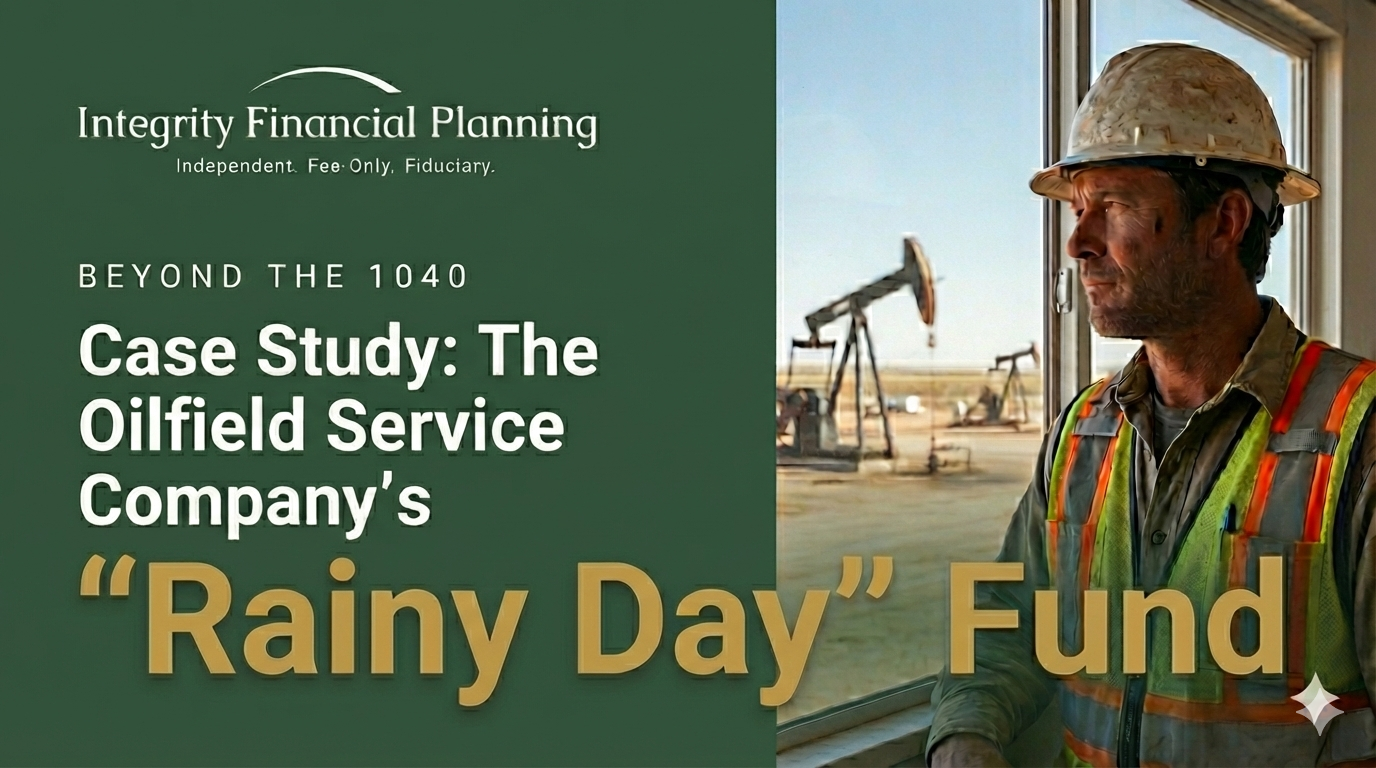
How Can Business Owners Deduct Uninsured Risks? A West Texas Oilfield Case Study
Many capital-intensive industries operate with massive exposure to risks that traditional insurance carriers simply will not cover. Here is how one business fundamentally shifted its risk profile and tax burden.
- The Problem: Paying for the Wrong Coverage
- A mid-sized oilfield service company in West Texas was paying exorbitant premiums for standard general liability insurance.
- Despite these high overhead costs, they had absolutely zero coverage for their two most likely and existential threats: "Loss of Key Customer" and "Regulatory Interruption."
- The Solution & Execution: Building the Custom Safety Net
- We conducted a thorough Feasibility Analysis to determine if the enterprise qualified for a Section 831(b) Captive.
- After structuring the new entity, the operating company paid $1.2M in premiums directly to their own Captive to explicitly cover those previously uninsured risks.
- The Financial Impact: Tax Efficiency Meets Real Protection
- Immediate Tax Deductions: The operating company claimed a $1.2M tax deduction for the insurance premiums paid.
- Tax-Free Accumulation: The newly formed Captive Insurance company paid $0 in federal income tax on that $1.2M premium income, allowing the reserve to be established highly efficiently.
- Crisis Mitigation: Two years later, a sudden regulatory change forced a 3-month shutdown on a major drilling project. The Captive paid out a legitimate claim to the operating company to cover the losses, keeping the business fully afloat without dipping into operational cash flow.
The Business Owner’s Advantage: Transforming Catastrophe into a Minor Bump
Without this proactive structure, the outcome would have been financially devastating. The client would have paid top-bracket ordinary income tax on that $1.2M of revenue initially, and then bled their remaining cash reserves dry during the unexpected 3-month shutdown.
Instead, by utilizing advanced planning, the business owner transformed a catastrophic regulatory freeze into a highly manageable operational speed bump. More importantly, rather than enriching a third-party, commercial insurance conglomerate for policies with massive exclusions, the owner retained that capital and built wealth within their own closely-held financial ecosystem.
Is Advanced Risk Management Right for Your Business?
True risk management goes far beyond buying an off-the-shelf general liability policy. It requires looking at the actual, operational threats to your specific business and engineering a proactive financial structure to defend against them.
This level of advanced planning requires a specialized team to execute compliantly and effectively. Let’s be that team. If your mid-sized business is exposed to unique, underinsured risks, contact Ryan Firth at Integrity Financial Planning today to schedule a customized risk-mitigation and tax strategy consultation.